By Severi Suomala
Published 30.09.2025
Experience gave me my first promotion. Curiosity gave me the rest.
I have worked in insurance, SaaS, and security, not exactly a straight and obvious career path. Each time, experience helped me get started. It gave me the context to step into a new role and know which way was up. But what really carried me forward was curiosity: asking the extra questions, figuring out what made customers tick, and refusing to accept “that’s how we’ve always done it” as an answer.
That is the real difference. Experience gives perspective. Curiosity keeps you moving.
Why curiosity matters more than background
If sales were only about what you already know, most of us would be out of work by now. Products change, markets shift, and customers raise questions that never appeared in last year’s onboarding slides. Experience offers useful context, but it comes with a “best before” date. Learning sciences distinguish between routine expertise, performing known tasks, and adaptive expertise, which allows transfer of knowledge and strategies into new situations (Sawyer 2022, 92–94). In sales, adaptive expertise is the one that lasts.
Curiosity fuels adaptability. It drives people to ask “why” when others stop. Research shows curiosity sustains learning even when other motivators fade (Sawyer 2022, 609–613). Leslie (2014, 63–65) calls it a compounding asset: static knowledge decays, while curiosity generates fresh insights.
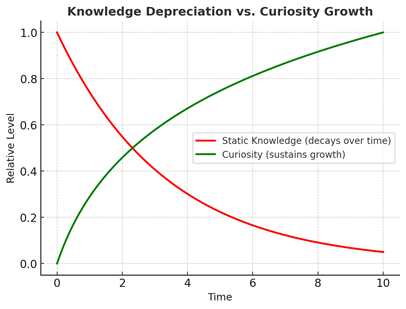
Figure 1. Knowledge depreciation vs. curiosity growth as explained by Leslie (2014).
Practice supports this. Mark Roberge found that curiosity and coachability predicted sales success more reliably than aggression or prior industry knowledge (Roberge 2015, 34–36). Jill Konrath (2014, 20–34) highlights agility, the speed of learning, as the ultimate differentiator. Adam Grant (2021, 23–25) warns that intelligence without rethinking can trap us in assumptions, whereas curiosity helps us update and adapt.
In short, experience teaches how to win in the past. Curiosity shows how to win in the future.
Curiosity as behaviour, not trait
Curiosity is often seen as a personality trait, but research shows it is a behaviour that can be practiced and improved. Reflection and self-regulation encourage people to identify gaps in their knowledge, sustaining curiosity over time (Sawyer 2022, 92–94; 609–613). Warren Berger (2014, 31–33) describes questioning as a discipline that comes from deliberate practice, not accidents.
Leadership plays a role too. Stanier (2016, 153–155) shows managers can coach curiosity by asking reflective, open-ended questions instead of giving quick answers. Nick Kane (2019) calls curiosity the most underappreciated sales trait, often overlooked in favour of training or activity metrics. George Brontén (2021) adds that while some seem naturally inquisitive, curiosity can become team culture if leaders reward learning, encourage deeper questioning, and model genuine interest.
How to cultivate curiosity in teams
Curiosity thrives when reflection and inquiry are built into daily routines. People and teams that pause to assess what they’ve learned, where gaps remain, and what strategies worked best develop habits that sustain curiosity (Sawyer 2022, 93–106; 134–139).
Practical sales work shows this as well. Berger (2014, 148) notes that environments which reward questioning, not just quick answers, cultivate curiosity. Stanier (2016, 137) explains how managers can turn interactions into “learning loops.” Dani Jones (2024) suggests using learning logs, role-plays, and thorough pre-call research to embed curiosity-driven sales. Ryan Walsh (2023) reframes “Always Be Closing” as “Always Be Curious,” reflecting a shift toward engagement over pressure.
Konrath (2014, 25) stresses agility as today’s decisive skill, making onboarding more about accelerating learning habits than delivering product knowledge. Brontén (2021) emphasizes that culture cements curiosity into practice. Just as athletes drill reflexes, salespeople can train curiosity until it becomes automatic.
Curiosity as trust-builder and risk-reducer
Trust is the real currency of sales. Curiosity accelerates it by showing genuine interest in the customer’s world. Dale Carnegie (2020, 49–52) argued that goodwill comes from genuine interest in others. Cialdini (2009, 167) confirms reciprocity and listening build influence.
Research shows curiosity sustains motivation and engagement, strengthening connections (Sawyer 2022, 602–613). In sales, this means customers feel heard and valued, lowering perceived risk. Bob Marsh (2025) notes curiosity-driven questioning often turns sceptical prospects into engaged customers. Frances Frei (2018) identifies authenticity, logic, and empathy as the three pillars of trust, all reinforced by curiosity. Brontén (2021) adds that curiosity makes buyers see the salesperson as a partner solving problems, not just pushing transactions.
Where we have been, where we are going
Experience is like a receipt for what you have seen. Curiosity is a ticket for what you have yet to discover. Both matter, but they play different, complementary roles.
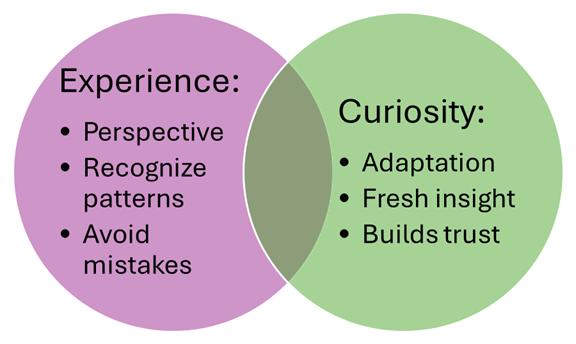
Figure 2. Complementary roles of Experience and Curiosity.
Experience offers perspective. It helps us recognize patterns and avoid old mistakes. Curiosity ensures those patterns do not become blinders. It pushes us to keep learning, to ask the questions others stopped asking, and to adapt when markets shift.
The real challenge for leaders is not to choose between curiosity and experience, but to balance them. Experience tells us where we have been. Curiosity shows us where we are going. The organizations that thrive will be the ones that know how to invest in both.
I’ll leave you with a few questions:
- How have you fed curiosity in your own work or team?
- When has curiosity helped you win trust with a customer?
- If you hire or lead salespeople, how do you spot curiosity in candidates or coach it in your team?
If these ideas spark something for you, I’d love to hear about it. Feel free to reach out, whether you want to swap stories, discuss how to build curiosity into sales, or try out some practical exercises.
References
Berger, W. 2014. A More Beautiful Question: The Power of Inquiry to Spark Breakthrough Ideas. New York: Bloomsbury.
Brontén, G. 2021. A More Curious Sales Team is a More Successful Sales Team. Membrain Blog. Available at: https://www.membrain.com/blog/a-more-curious-sales-team-is-a-more-successful-sales-team [Accessed 10 September 2025].
Carnegie, D. 2020. How to Win Friends and Influence People. 1st ed. New Delhi: Orange Books International.
Cialdini, R. B. 2009. Influence: The Psychology of Persuasion. New York: HarperCollins.
Frei, F. 2018. How to Build (and Rebuild) Trust. TED Talk. Available at: https://www.ted.com/talks/frances_frei_how_to_build_and_rebuild_trust [Accessed 10 September 2025].
Grant, A. 2021. Think Again: The Power of Knowing What You Don’t Know. New York: Penguin Random House.
Jones, D. 2024. Curiosity-Driven Sales: How to Build Stronger Customer Connections. TL;DV Blog. Available at: https://tldv.io/blog/curiosity-driven-sales [Accessed 11 September 2025].
Kane, N. 2019. Curiosity is Sales’ Unsung, Important Personality Trait. Janek Performance Group Blog. Available at: https://www.janek.com/blog/curiosity-is-sales-unsung-important-personality-trait [Accessed 12 September 2025].
Konrath, J. 2014. Agile Selling: Get Up to Speed Quickly in Today’s Ever-Changing Sales World. New York: Portfolio/Penguin.
Leslie, I. 2014. Curious: The Desire to Know and Why Your Future Depends On It. New York: Basic Books.
Marsh, B. 2025. Sales Blog. Available at: https://meetbobmarsh.com/blogs/ [Accessed 12 September 2025]
Roberge, M. 2015. The Sales Acceleration Formula: Using Data, Technology, and Inbound Selling to Go from $0 to $100 Million. Hoboken: Wiley.
Sawyer, R. K., et.al. 2022. The Cambridge Handbook of the Learning Sciences. 3rd ed. Cambridge: Cambridge University Press.
Stanier, M. B. 2016. The Coaching Habit: Say Less, Ask More & Change the Way You Lead Forever. Toronto: Box of Crayons Press.
Walsh, R. 2023. Always Be Curious: The New Sales Mindset. RepVue Blog. Available at: https://www.repvue.com/blog/always-be-curious [Accessed 11 September 2025].